

Organizations are rapidly adopting Microsoft Copilot and other AI-powered productivity tools to improve efficiency, streamline collaboration, and support faster decision-making. By helping employees summarize meetings, analyze documents, generate content, and surface relevant information in seconds, these tools are transforming the way people work. As adoption accelerates, however, organizations are beginning to realize that deploying AI is only one part of the equation. Ensuring it operates securely and responsibly is becoming an equally important priority.
Unlike traditional workplace applications, Microsoft Copilot doesn’t generate insights in isolation. It draws information from across an organization’s existing Microsoft 365 environment, including emails, documents, chats, meetings, and shared files. This ability to connect and surface enterprise knowledge is what makes it so powerful, but it also means the quality of its output depends entirely on the data it can access.
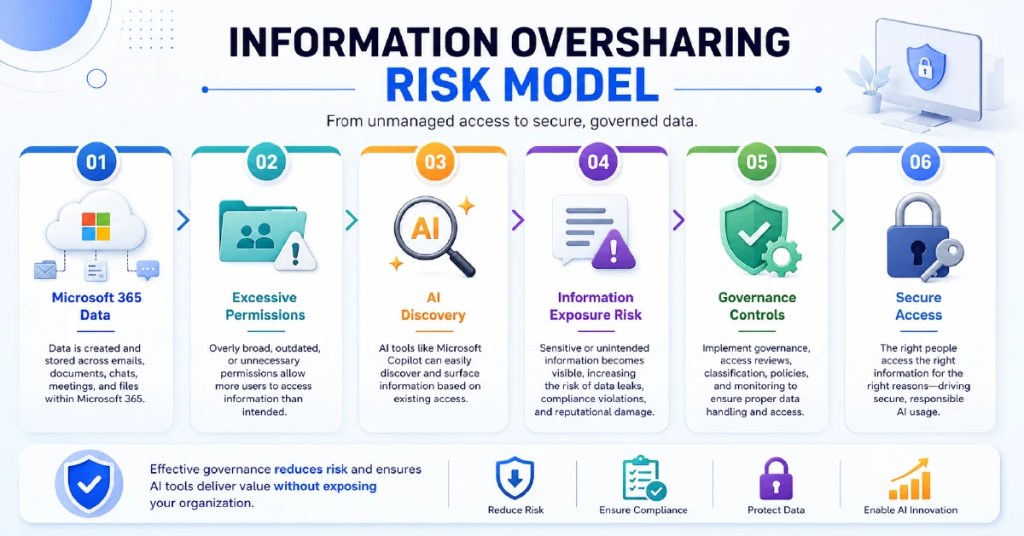
That shifts the conversation from AI capabilities to data governance. If permissions are overly broad, sensitive information is poorly classified, or legacy access controls remain unchecked, AI can surface data that users technically have access to but are unlikely to discover on their own. In many cases, the greatest challenge isn’t the AI itself, it’s ensuring the underlying data environment is governed, secure, and ready for AI to use responsibly.
This challenge has already begun to surface in real-world environments. In 2024, security researchers and enterprise customers reported instances where Microsoft’s AI tools highlighted documents and conversations that employees were technically authorized to access but had never previously discovered because they were buried within years of SharePoint sites, Teams channels, and OneDrive folders. While these were not security breaches or failures of Microsoft Copilot itself, they exposed long-standing permission and governance issues that many organizations had overlooked, reinforcing that AI often reveals existing data governance gaps rather than creating new ones.
The Information Oversharing Problem
One of the most common concerns surrounding enterprise AI adoption is the risk of information oversharing. While Microsoft Copilot respects existing Microsoft 365 permissions and does not bypass security controls or grant users access to data they are not authorized to see, it can make long-standing permission issues much more apparent.
Over the years, many organizations have accumulated vast amounts of information across SharePoint, OneDrive, Microsoft Teams, and other Microsoft 365 services. As teams grow, projects evolve, and employees move between roles, access permissions are not always reviewed or updated consistently. Documents that were originally intended for a small team may end up being shared with a much broader audience, former employees or project members may still retain access to sensitive files, and confidential information may remain unclassified or stored in locations with overly permissive settings.
Before the introduction of AI-powered search and productivity tools, these governance gaps often went unnoticed because locating specific information required time and effort. Microsoft Copilot changes that by making enterprise knowledge easier to discover and connect. As a result, organizations are placing greater emphasis on reviewing permissions, strengthening data governance, and ensuring that the information AI can access is managed as carefully as the AI itself.
Why Microsoft 365 Security Matters

Successful AI adoption starts with strong Microsoft 365 security and data governance practices.
Microsoft’s 2024 Data Security Index found that more than 80% of business leaders identified data leakage as one of their primary concerns when implementing generative AI, highlighting that governance and information protection have become central to enterprise AI adoption strategies rather than afterthoughts.
Before deploying Copilot at scale, organizations should evaluate whether their existing environment is prepared for AI-driven access to information.
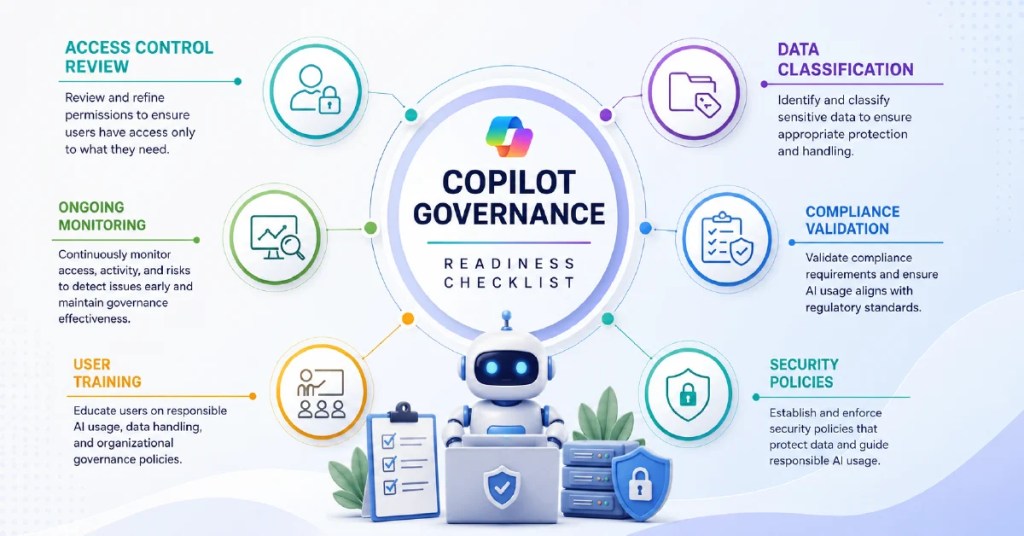
Access Controls are the first place to start. Organizations should regularly review user permissions across Microsoft 365 to ensure employees only have access to the information they genuinely need for their roles. As teams evolve and projects change, permissions often become outdated, increasing the likelihood that AI tools will surface information to a wider audience than originally intended.
Data Classification is equally important. AI can only work with the information available to it, so organizations need to identify and label sensitive data appropriately. Financial records, customer information, legal documents, intellectual property, and HR files should be classified using clear policies so they receive the appropriate level of protection and governance.
Compliance Requirements should also be built into any AI adoption strategy. Organizations operating in regulated industries must ensure that the way AI accesses, processes, and presents information aligns with privacy regulations, retention policies, and industry-specific compliance obligations. Strong governance helps ensure that productivity gains do not come at the expense of regulatory compliance.
Finally, Security Monitoring provides continuous visibility into how enterprise data is being accessed and used. Monitoring user activity, reviewing access patterns, and identifying unusual behavior can help organizations detect governance gaps or potential security risks before they develop into larger issues.
Security Monitoring
Ongoing monitoring helps organizations identify unusual access patterns, governance gaps, and potential risks before they become larger problems.
When these foundations are in place, organizations can adopt AI with greater confidence.
Governance Should Come Before AI Deployment
Many organizations treat governance as a task that follows AI deployment. In reality, governance should be a prerequisite.
Before expanding Copilot usage, IT leaders should focus on:
- Reviewing access permissions
- Identifying sensitive data
- Applying classification policies
- Validating compliance requirements
- Establishing governance processes
- Educating users on responsible AI usage
This approach helps reduce risk while creating a more secure foundation for enterprise AI adoption.
Governance Is an Ongoing Responsibility
Governance is not a one-time initiative that ends once an AI solution is deployed. It is an ongoing process that must evolve alongside the organization. As new content is created, employees join or change roles, and AI adoption expands across departments, access permissions, data classifications, compliance requirements, and security policies all need to be reviewed regularly. These continuous assessments help ensure that AI tools continue to operate within the organization’s governance framework while reducing the risk of unintended data exposure. Organizations that are seeing the greatest success with enterprise AI are not simply those adopting it the fastest; they are the ones investing time in building a strong governance foundation that allows AI to deliver value securely, responsibly, and at scale.
What we offer!
Microsoft Copilot has the potential to transform workplace productivity, but successful adoption requires more than enabling AI features.
Organizations must ensure their Microsoft 365 environment is prepared for the way AI interacts with enterprise data. Permissions, data classification, compliance, and governance processes all play a critical role in reducing risk and protecting sensitive information.The most successful AI initiatives begin with a simple principle: secure AI starts with secure data.
At Open Storage Solutions, we help organizations strengthen data governance, improve information security, and prepare their environments for enterprise AI adoption. As Microsoft Copilot and other AI-powered tools become increasingly integrated into business operations, a strong governance strategy will be essential for secure and sustainable success.
Add your first comment to this post